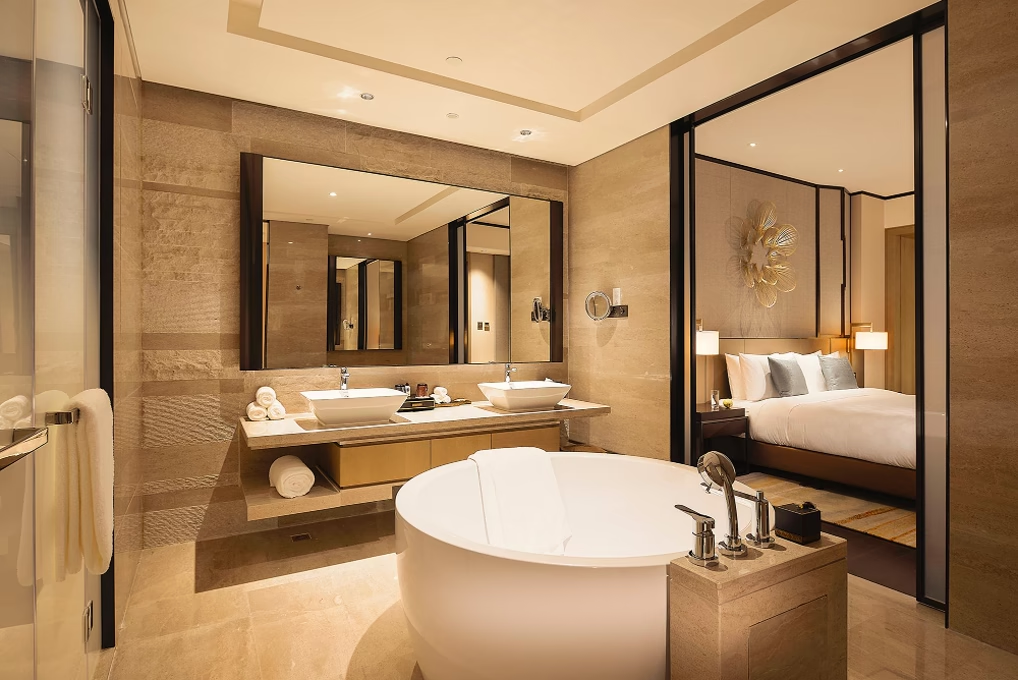
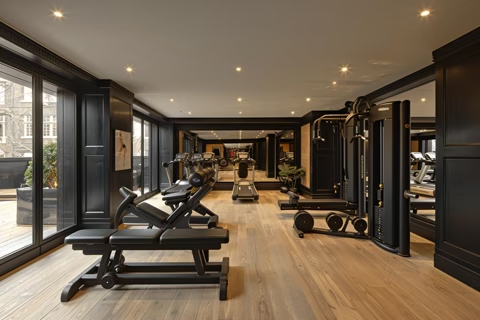

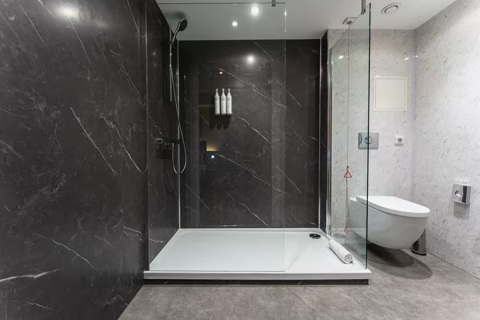
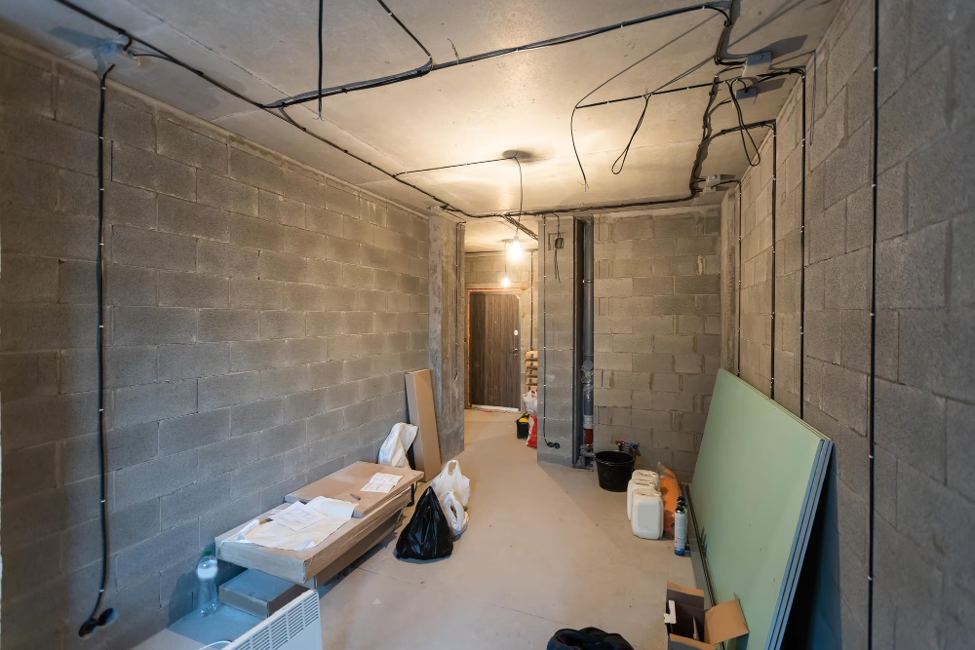
Hotel refurbishment is one of the most commercially important and sensitive investments a hotel owner or operator can make. Done well, it protects room rates, maintains brand standards and extends the revenue-generating life of the asset. Done poorly, it can alienate guests, generate complaints and take rooms out of commission far longer than necessary, directly affecting revenue.
GuestReady analysis has suggested that empty hotel rooms can represent between £22 and £53 per room per night in lost revenue, depending on the city. For larger refurbishment programmes, that commercial impact can multiply quickly across multiple rooms, floors and weeks. A professional hotel refurbishment contractor should therefore focus not only on workmanship, but also on programme control, room availability, guest experience and clear communication with hotel management.
This article sets out the key principles of hotel contracting that help minimise disruption during hotel refurbishment and fit-out works. We cover both live-environment working practices and the pre-construction disciplines that protect room availability and revenue during larger-scale programmes.
Minimising Guest Disruption During Live Hotel Refurbishment
Noise Management and Restricted Working Hours
Noise is one of the most common causes of guest complaints during hotel refurbishment works. Effective noise management goes beyond simply keeping operatives quiet; it requires a properly sequenced programme that restricts disruptive activities to defined working windows. This is typically within the period between guest checkout and check-in. Activities such as breaking out, drilling or noisy mechanical works should be scheduled for periods when adjacent rooms and guest areas are more likely to be unoccupied.
Dust Containment and Site Hygiene
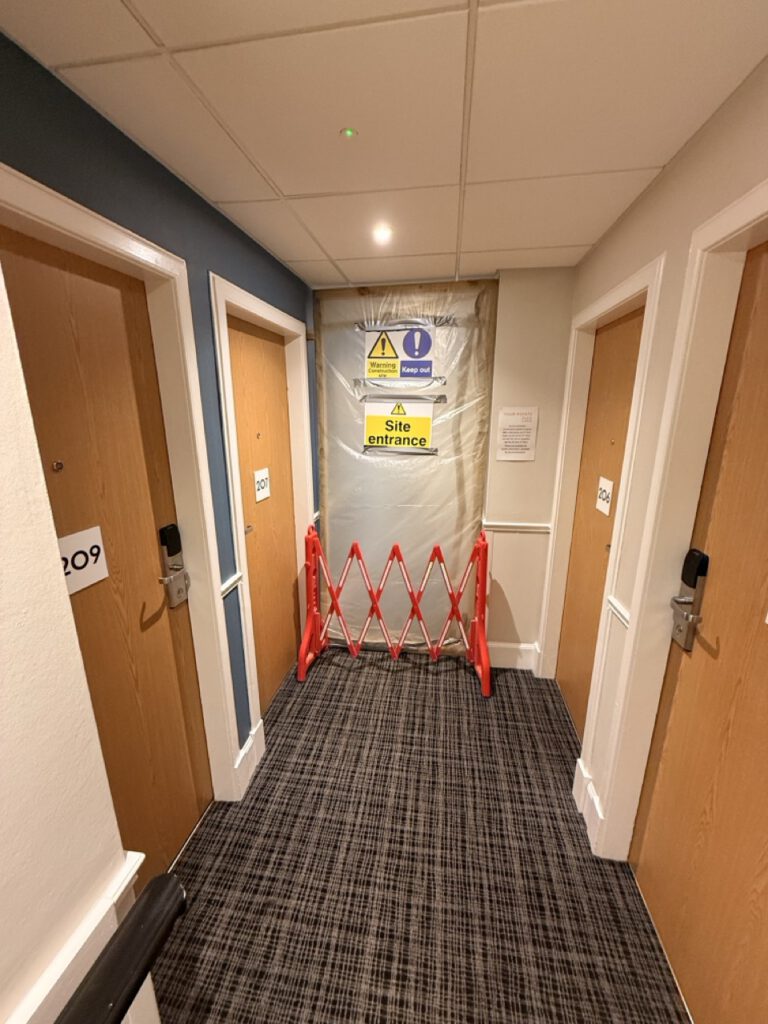
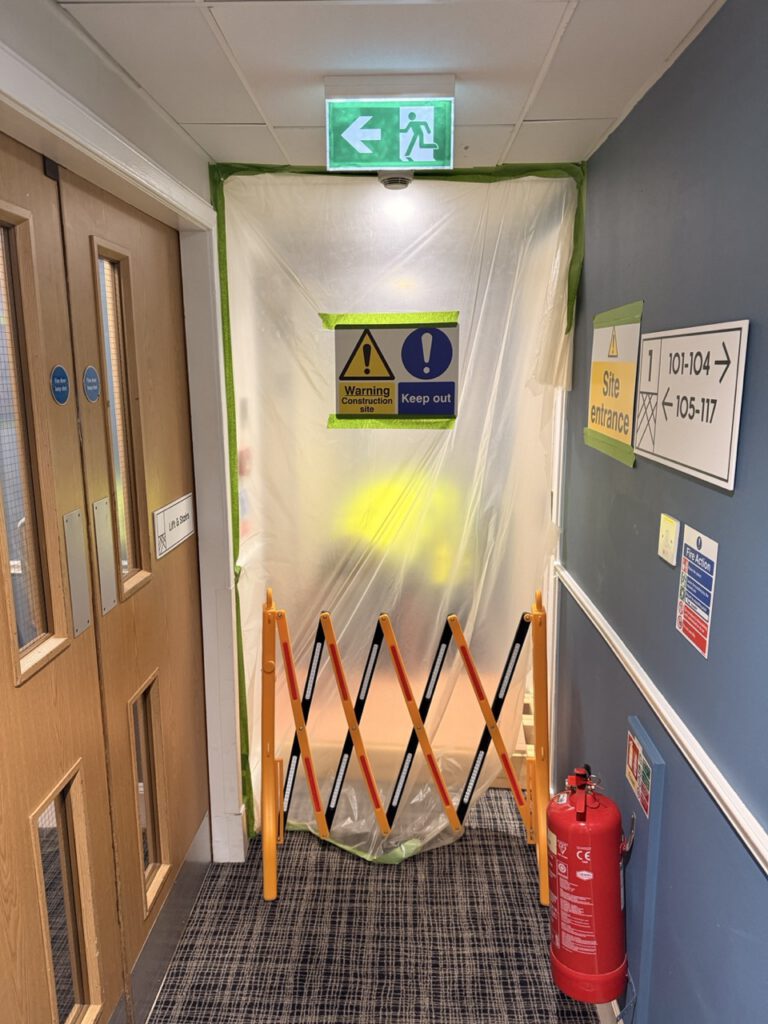
In a live hotel environment, dust containment and site hygiene must be treated as core parts of the works, not afterthoughts. Construction dust can be controlled through measures such as physical screening and hoarding at the boundaries of the works zone, negative pressure extraction where required and rigorous daily cleaning of contractor access routes. Contamination of guest corridors, lifts and public areas is preventable with the correct measures in place.
Clear Segregation of Guest and Contractor Areas
Guest circulation and contractor access should not overlap wherever this can reasonably be avoided. Dedicated contractor routes, including separate lift use, staircase allocation and materials delivery windows, should be established before works commence and maintained for the duration of the programme. This segregation protects the guest experience, reduces the risk of incidents and keeps the works zone clearly defined.
Phased Delivery and Programme Sequencing
Building Refurbishment works are often best undertaken in a small number of discrete phases. One way to achieve this is to take a floor-by-floor or room-by-room approach, depending on the scale of works and layout of the hotel. This allows the hotel to keep trading, minimising revenue loss while effectively segregating guest and contractor areas. A well-sequenced programme, developed in collaboration with hotel management, helps control and predict the number of rooms out of commission at any one time, allowing reservations to be managed accordingly. Where possible, rooms should be released back to the hotel in controlled batches, supported by inspection records and snagging sign-off, so reservations teams have reliable information about when inventory will return.
Daily Coordination with Hotel Management
Effective communication between the contractor’s site team and hotel management is a core discipline required to reduce guest disruption and keep the refurbishment on track. A daily briefing, even a short one, ensures that hotel management are aware of planned noisy works, access restrictions and any programme changes before guests are affected by them. This communication loop is one of the key differences between a contractor experienced in live hotel environments and a contractor approaching the works as a standard commercial fit-out.
Minimising Revenue Loss During Full Hotel Refurbishment and Fit-Out
For full hotel refurbishments, rebranding programmes or major structural fit-out works, partial or complete closure is sometimes unavoidable. Unlike the live-environment working covered above, these are programmes where whole sections or the entire hotel may need to be taken out of commission for a defined period. In these circumstances, the contractor’s ability to manage the programme with precision directly influences how long rooms remain unavailable to paying guests and how quickly the hotel can return to full trading.
VisitBritain room revenue varying significantly by location, property type, season and trading conditions, every unnecessary day added to a closure programme carries a measurable commercial cost. The disciplines below are what separate hotel fit-out contractors who understand this commercial pressure from those who do not.
Programme Development Before a Single Room Goes Offline
A detailed, trade-coordinated programme should be agreed and signed off before the hotel closes rooms or areas to guests. This means sequencing every trade package from drylining, passive fire protection, suspended ceilings and bathroom fit-out through to flooring, decoration and FF&E installation. Well-planned sequencing should include clearly defined start dates, durations, handover points between trades and float allowances for realistic risk. A programme developed in this way gives the hotel operator a credible reopening or room-release date against which bookings and revenue can be planned.
Site Setup, Mobilisation, and Trade Coordination
Lost time at the start of a closure programme is lost time that may be difficult to recover without compressing later stages. A structured mobilisation plan covering site setup, welfare facilities, materials deliveries and access sequencing help ensure trades are productive from day one. Poorly managed mobilisation, with different trades waiting on each other or on materials, is one of the most common and avoidable causes of programme slippage in full hotel fit-out works.
Acceleration Strategies to Compress the Closure Period
Where the programme allows, extended working hours, weekend working and running parallel trade packages across separate zones of the building can all reduce the total closure period. These decisions carry a cost premium, but where the value of earlier room release outweighs the additional labour or management cost, acceleration can be commercially justified. This calculation should be made explicitly with the hotel operator as part of programme planning, rather than reactively when the programme is already running late.
Quality Control, Inspections, and Staged Handover
Rooms handed back with unresolved defects may not be ready to sell. A staged handover process, inspecting and signing off completed rooms and floors progressively rather than through a single end-of-programme snagging exercise, can allow the hotel to begin returning rooms to inventory before the full programme is complete. This supports earlier room release and reduces the tail of the closure period. It requires a contractor operating a disciplined quality management process aligned with ISO 9001 principles, with documented inspection records at each stage.
A successful hotel refurbishment is not just one that finishes on site; it is one that allows the hotel to return rooms to sale in a completed, guest-ready condition, with clear records of what has been inspected and handed over. That outcome is a product of planning, coordination and disciplined delivery, not optimism.
Conspector: Hotel Refurbishment and Fit-Out Contractors, Scotland
Conspector delivers hotel bedroom refurbishment, bathroom refurbishment, FF&E installation and fit-out works across Scotland’s central belt. We have experience working in live hotel environments where sequencing, communication, guest protection and room availability are critical.
Our work is led by a qualified Building Surveyor with NEBOSH construction health and safety training, bringing a strong understanding of building fabric, defect identification, specification, sequencing and quality-controlled handover. We operate a quality management process aligned with ISO 9001 principles and work with awareness of current Scottish Building Standards.
Planning a Hotel Refurbishment?
If you are planning a hotel refurbishment, phased bedroom upgrade, bathroom refurbishment or wider fit-out programme, Conspector can help plan and deliver the works around live hotel operations. Contact Conspector to discuss your hotel’s project requirements.