
The UK hotel sector enters 2026 in an active but commercially demanding phase. VisitBritain’s March 2026 accommodation update highlights a series of recent and forthcoming hotel openings across the UK, including refurbished heritage properties and new lifestyle-led accommodation. For procurement managers and estate teams responsible for capital works programmes, understanding the refurbishment and design trends shaping the sector is essential to making informed investment decisions.
Renovation Over Redevelopment
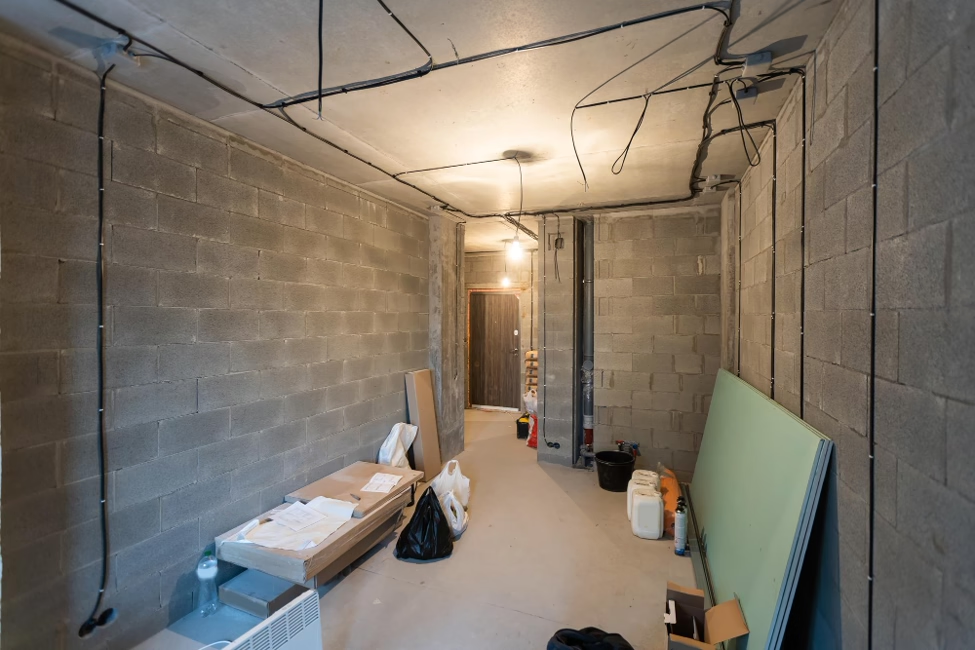
One of the clearest strategic shifts in 2026 is the continued preference for refurbishment, retrofit and repurposing over ground-up redevelopment. Retrofit can often be delivered more quickly than full redevelopment, reduces exposure to inflation-sensitive materials by retaining existing structure and façade, and can lower embodied carbon while protecting heritage value.
Operators are increasingly looking at existing buildings and heritage assets as opportunities for repositioning, combining original character with modern hospitality standards. In Scotland, heritage buildings and city-centre properties can offer strong opportunities for hotel repositioning, provided planning, building standards, access, fire safety and fabric condition are properly considered from the outset.
For operators, this makes early condition assessment important. Existing buildings can carry hidden issues within services, structure, compartmentation and finishes, so refurbishment budgets should include realistic contingency allowances and early investigation works.
Experience-Led Design and the Changing Guest Expectation
Hotel design in 2026 is no longer judged on visual impact alone. Operators are increasingly focused on how spaces perform: how they support guest comfort, operational efficiency, brand positioning, maintenance, sustainability and revenue-generating uses.
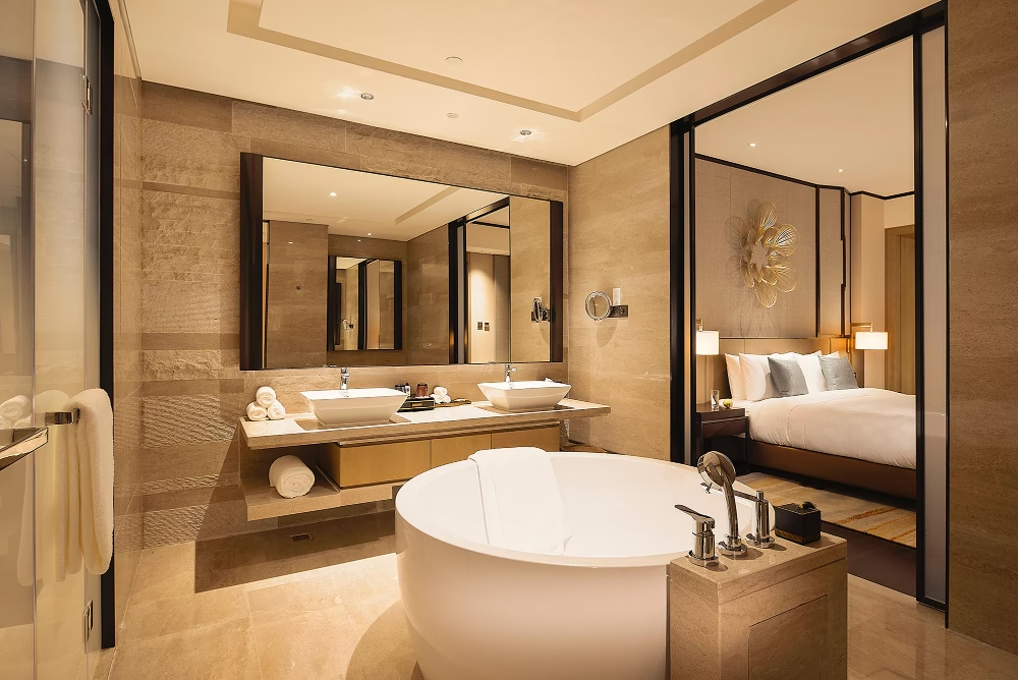
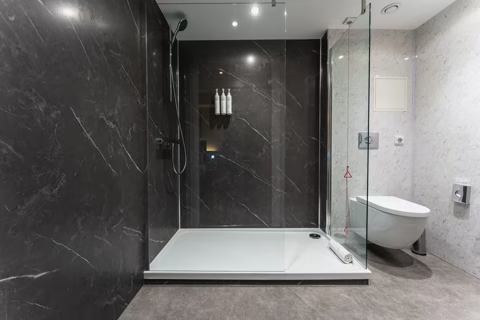
Successful hotel refurbishment therefore requires more than attractive finishes. It requires design intent to be translated into practical, buildable works that can be delivered consistently across bedrooms, bathrooms, corridors, public areas and back-of-house spaces.
Warm Palettes, Woven Fabrics and Nature-Inspired Design
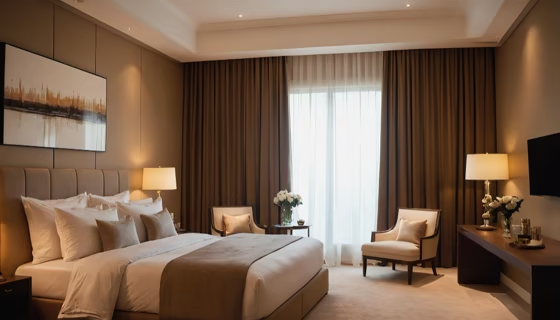
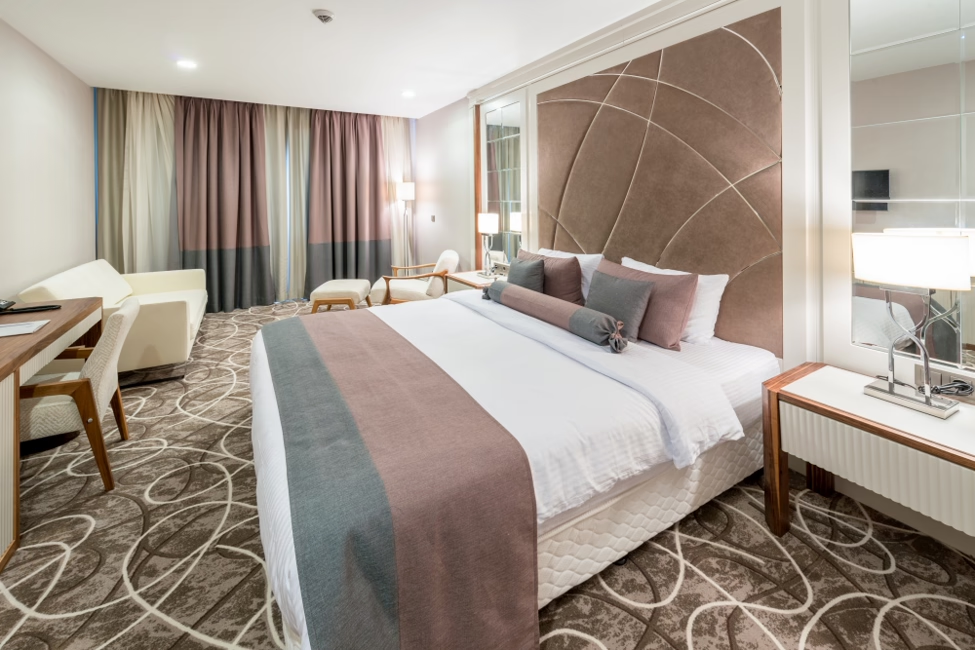
Hospitality interiors in 2026 are moving towards warmer palettes, layered textures, woven fabrics, natural finishes and more tactile surfaces. For refurbishment programmes, this increases the importance of consistent workmanship across multiple types of guest space. The design intent may be softer and more natural, but delivery still depends on accurate setting out, well-managed trades and robust quality control.
Wellness and Flexible Spaces
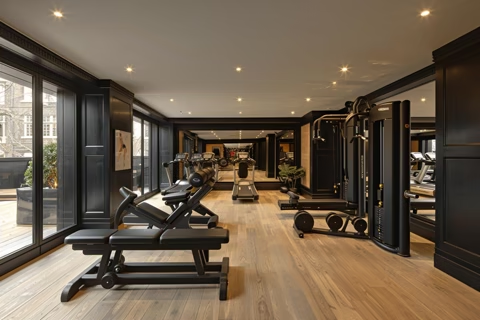
Wellness, sustainability and authenticity have moved from niche differentiators towards mainstream considerations in hotel design. Hotels are increasingly redesigning bedrooms and public areas to accommodate more flexible guest use, including leisure stays, business travel, blended work/leisure trips and extended-stay requirements.
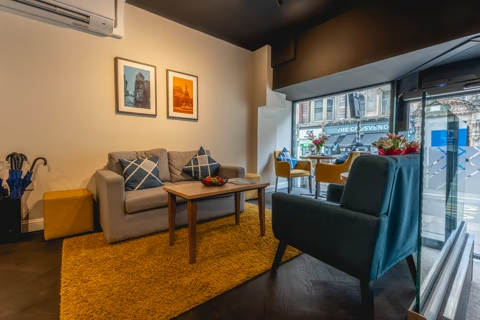
Changes in business travel patterns and demand for more flexible guest spaces are encouraging some hotels to rethink bedrooms, lounges, meeting areas, bars, restaurants and wellness amenities. For refurbishment teams, this can mean more complex scopes involving FF&E, lighting, finishes, services coordination, acoustic considerations and phased delivery around live hotel operations.
Compliance as a Refurbishment Driver
Compliance is also a major refurbishment driver. Fire safety, accessibility, energy performance, ventilation, compartmentation, fire doors and passive fire protection can all influence the scope of hotel refurbishment works.
In existing hotels, the gap between current building condition and the standards expected by insurers, fire risk assessors, brand auditors or statutory authorities can be wider than anticipated. Relevant guidance and standards, including Scottish Building Standards, BS 9999 and BS 8214:2026, should be considered early in the planning process rather than treated as late-stage adjustments.
A refurbishment programme is therefore an opportunity not only to improve the guest experience, but also to review existing building fabric, identify defects, address legacy issues and ensure that the proposed works are properly coordinated with the hotel’s operational and compliance requirements.
Programme Certainty as a Competitive Advantage
With margins under pressure and rate growth expected to be more modest, programme certainty has become a commercial priority. For every extra day a room spends out of commission, there is a direct impact on revenue and room availability.
Discovery risks in existing building fabric remain and should be managed through robust surveys, sensible contingencies and clear pre-construction planning. Hotels that appoint contractors with genuine experience in existing buildings, phased refurbishment and live hotel environments are better placed to reduce the risk of programme overruns.
Programme certainty depends on more than an optimistic start and finish date. It requires practical sequencing, early procurement, coordinated trade packages, clear reporting, progressive inspections and staged handover so that rooms and areas can return to use in a controlled, guest-ready condition.
Conspector: Hotel Refurbishment and Fit-Out Contractors, Scotland
Conspector delivers hotel refurbishment, bedroom and bathroom refurbishment, FF&E installation and fit-out works across Scotland’s central belt. We work with hotel operators, estate managers and asset managers on programmes ranging from phased room upgrades to wider hotel refurbishment and fit-out works.
Led by a qualified Building Surveyor with NEBOSH construction health and safety training, we bring a strong understanding of building fabric, condition assessment, specification, sequencing and quality-controlled handover. Our quality management process is aligned with ISO 9001 principles, supporting consistent inspection, reporting and handover records.
If you are planning a hotel refurbishment programme, contact Conspector to discuss your project requirements.